Telehealth 101
Does Urgent Care Do Telehealth?

You wake up with a sore throat, a rash, or a sinus infection that is clearly not getting better, but you also have meetings, errands, and about zero interest in sitting in a waiting room. That is usually when people ask, does urgent care do telehealth? In many cases, yes. Virtual urgent care has become a practical option for adults who need timely care for common health concerns without rearranging their whole day.
The short answer is that many urgent care providers now offer telehealth visits for a range of non-emergency issues. But the more useful answer is this: telehealth urgent care works very well for some problems, not at all for others, and the difference matters.
Does urgent care do telehealth for the same issues as in-person care?
Sometimes, but not always. Virtual urgent care is designed for lower-risk concerns that can be evaluated through conversation, visible symptoms, medical history, and sometimes photos or video. If your issue can be reasonably assessed without hands-on testing, telehealth may be enough.
Common examples include cold and flu symptoms, sinus pressure, pink eye, minor skin concerns, uncomplicated urinary symptoms, allergies, mild stomach issues, and medication questions. Telehealth can also be useful for follow-up care when a clinician needs to check how symptoms are progressing after treatment starts.
Where telehealth has limits is when a clinician needs to listen to your lungs, press on your abdomen, run a rapid test, stitch a cut, or get imaging. If there is a decent chance that a physical exam changes the decision, in-person care is usually the better call.
That does not make telehealth a lesser option. It means it is the right tool for the right situation. For busy adults, that distinction saves time and avoids the frustrating cycle of choosing the wrong care setting first.
What virtual urgent care can usually treat
Most telehealth urgent care visits focus on common, straightforward problems. A clinician can review symptoms, ask about timing and severity, check your history, and decide whether treatment, self-care, or in-person evaluation makes the most sense.
Respiratory complaints are one of the most common reasons people book a virtual visit. That includes congestion, cough, sore throat, mild fever, sinus symptoms, and seasonal allergies. Skin issues also fit well, especially when a patient can upload a clear photo. Rashes, bites, irritation, and acne flares often can be discussed virtually.
Urinary symptoms are another frequent reason people use telehealth, particularly when the pattern feels familiar and uncomplicated. Minor digestive complaints, nausea, diarrhea, and heartburn may also be reasonable for a video or phone visit, depending on symptom severity and the rest of your medical history.
Some urgent care telehealth services also address headaches, pink eye, minor back pain, and everyday medication refill questions. Others expand beyond traditional urgent care into behavioral health, primary care, dermatology, or wellness support. That broader model can be helpful when the issue is not just urgent, but part of a bigger pattern that needs continuity.
When telehealth urgent care is not enough
This is the part people tend to underestimate. Convenience matters, but it should not override common sense. Virtual urgent care is not meant for emergencies, and it is not ideal for every same-day problem.
If you have chest pain, shortness of breath, signs of stroke, severe dehydration, major injuries, uncontrolled bleeding, or sudden severe pain, you need emergency care. The same goes for symptoms that are rapidly worsening or feel clearly outside the range of an everyday illness.
There is also a middle category where urgent care may be appropriate, but probably in person. Think possible fractures, deep cuts, severe ear pain, abdominal pain that needs an exam, or anything that may require testing such as strep, flu, COVID, urine testing, or imaging. A virtual visit may still help guide next steps, but it may not be the finish line.
Good telehealth care includes knowing when not to keep things virtual. A reliable clinician will tell you when you need hands-on evaluation instead of stretching a video visit beyond what it can safely do.
Why telehealth urgent care works so well for busy adults
The appeal is not hard to understand. You can talk to a licensed clinician from home, from your office, or from your car on a break. You skip the commute, the waiting room, and the disruption that often turns a 20-minute health issue into a half-day event.
That efficiency matters for working professionals, parents, caregivers, and anyone whose schedule leaves very little slack. It also matters for privacy. Some concerns feel easier to address from your own space than from a crowded clinic lobby.
There is another benefit people do not always think about: speed can improve follow-through. When care is easier to access, people are more likely to get evaluated early instead of waiting until symptoms become harder to manage. For issues like urinary symptoms, skin flares, minor infections, or everyday health concerns, that can make the whole process simpler.
For a platform like Fit For Duty Rx, the value is not just the convenience of one visit. It is the ability to connect urgent needs with broader support when needed, whether that means primary care, behavioral health, dermatology, or condition-specific wellness care that fits into real life.
How to tell if your issue is a good fit for telehealth urgent care
A practical rule is to ask two questions. First, does this seem non-emergency and fairly straightforward? Second, is there a good chance a clinician can make a decision without physically examining me or running on-site tests?
If the answer to both is yes, telehealth is often worth trying. A sore throat without severe swelling, a mild rash, sinus pressure, pink eye, or a recurring issue you recognize may fit well. If the answer is no, go in person.
It also helps to think about what you actually need from the visit. If you need reassurance, treatment guidance, a professional opinion, or a plan for next steps, virtual care can be very effective. If you likely need a swab, imaging, wound care, or hands-on evaluation, start with in-person care and save yourself an extra step.
What to expect from a telehealth urgent care visit
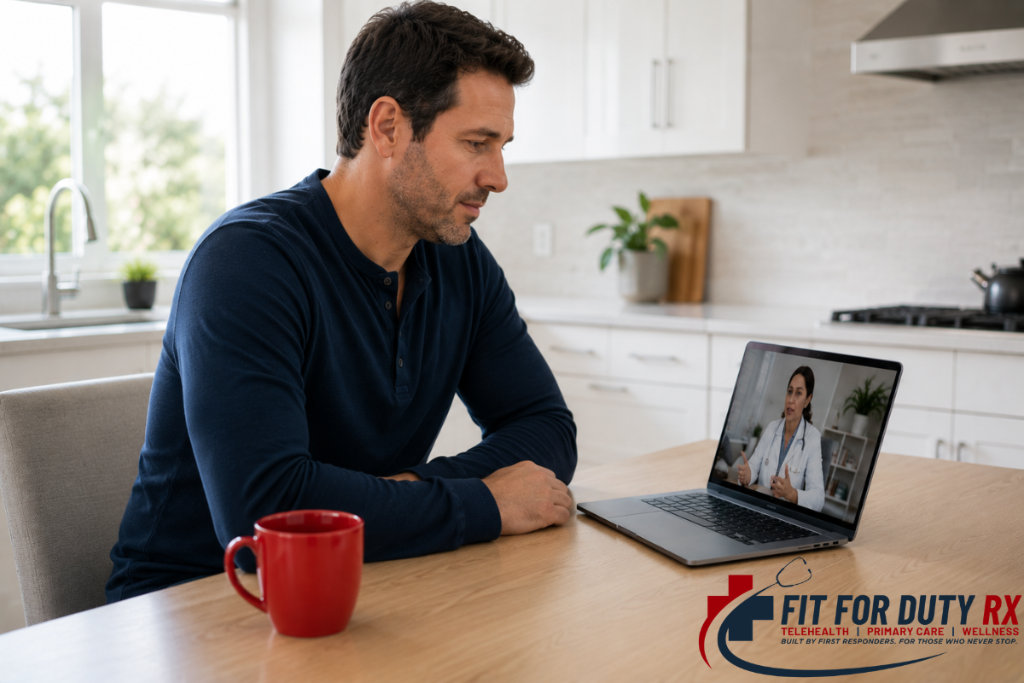
Most virtual urgent care visits are simple by design. You complete a short intake, describe your symptoms, share relevant history and medications, and meet with a clinician by video or sometimes phone. If your concern is visible, such as a skin issue or eye irritation, you may be asked to upload a photo.
The clinician will assess whether your symptoms fit a condition that can be managed virtually. If so, you may receive a treatment plan, self-care instructions, and guidance on what should prompt follow-up. If not, you should be told clearly where to go next and how quickly to seek in-person care.
The best experiences are direct and efficient. You get answers, a plan, and a realistic sense of whether the virtual visit is enough. That clarity is what makes telehealth useful, not just the fact that it happens on a screen.
The real answer to does urgent care do telehealth
Yes, many urgent care providers do telehealth, and for the right issue, it can be one of the smartest ways to get care quickly. But the better question is whether your specific problem fits a virtual visit. Telehealth is strong when symptoms are common, non-emergency, and assessable through history and observation. It is weaker when testing, procedures, or a hands-on exam are likely to matter.
That is why the best approach is not picking telehealth or in-person care as a blanket rule. It is matching the care setting to the moment. If your symptoms are mild to moderate, uncomplicated, and not raising red flags, virtual urgent care can save serious time without sacrificing good judgment.
When healthcare works, it fits into your life without asking you to hit pause on everything else. If telehealth can do that safely for your situation, it is not a backup plan. It is often the most practical place to start.
Ready to see a provider?
Affordable telehealth memberships, no insurance needed. See what is included and get started in minutes.
This article is for general educational purposes only and is not medical advice. It does not create a provider-patient relationship. Always talk with a licensed healthcare provider about your individual situation. If you are experiencing a medical emergency, call 911 or go to your nearest emergency room.